“Membranes are essential to clean water, filtration and separation, but too many are still made from fossil-based materials and hazardous processes. Green-Mem is changing that. By connecting researchers and innovators across Europe, Türkiye and Malaysia, we're building the skills, knowledge and partnerships needed to design bio-based, recyclable membrane technologies that perform well, reduce environmental burden and support a more circular future.”
Prof. Mustafa Ersöz, Project Coordinator,
Selçuk University
Green-Mem, “Pioneering Membrane Solutions for a Sustainable Future”, is a Marie Skłodowska-Curie Staff Exchanges project running from July 2026 to June 2030. Coordinated by Selçuk University, the project brings together partners from Türkiye, Spain, Italy, Latvia, Belgium, Ireland and Malaysia.
The consortium combines expertise in materials science, membrane fabrication, biopolymers, surface functionalisation, machine learning, environmental engineering, sustainability assessment, communication and innovation. Through international, intersectoral and interdisciplinary staff exchanges, Green-Mem is strengthening research collaboration, building skills and accelerating progress towards more sustainable membrane technologies.
About Green-Mem
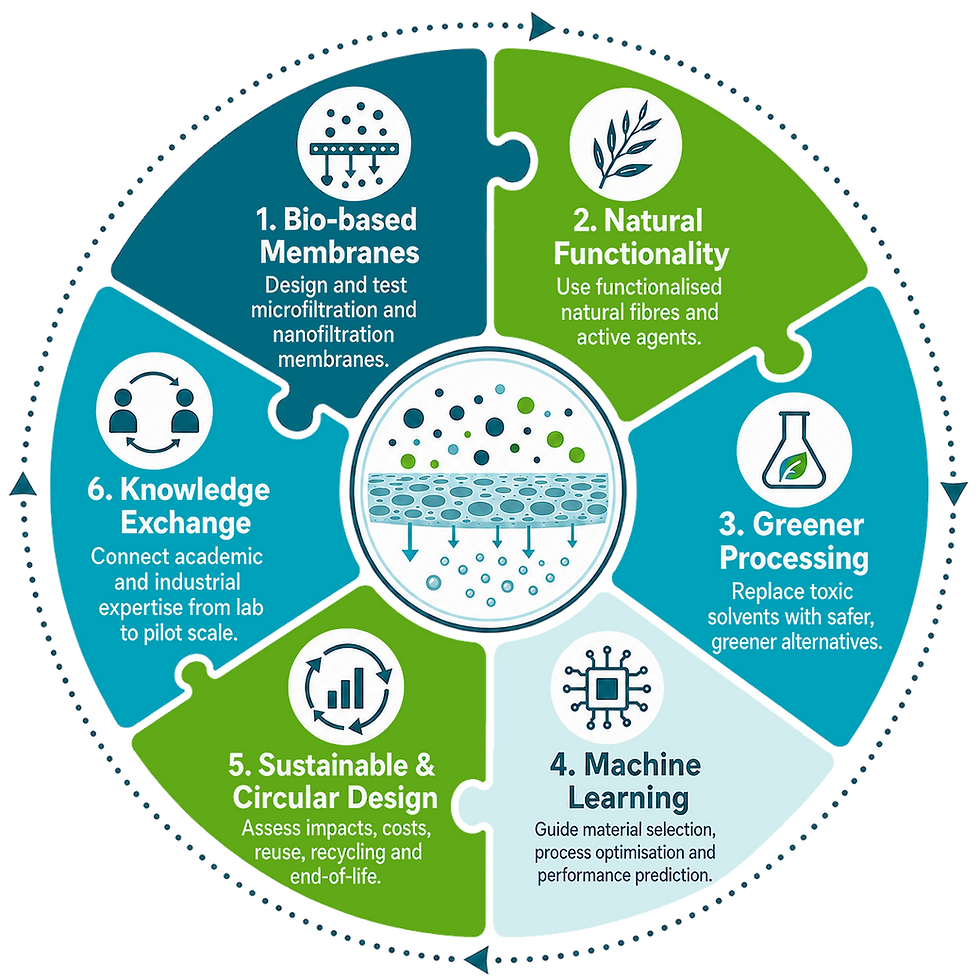
Green-Mem takes an integrated approach to sustainable membrane development. The project will design and test bio-based microfiltration and nanofiltration membranes, explore the use of functionalised natural fibres and active agents, replace conventional toxic solvents with greener alternatives, and investigate routes for reuse, recycling and end-of-life management.
Machine learning will support material selection, process optimisation and performance prediction, while life cycle assessment and techno-economic assessment will guide sustainable design choices. Staff exchanges will allow academic and industrial partners to share knowledge across the full innovation chain, from laboratory research to pilot-scale validation and future exploitation.
Our Approach

Expected Outcomes
Green-Mem is expected to deliver new knowledge, materials, methods and practical pathways for greener membrane technologies. Planned outputs include bio-based and biodegradable membrane materials, machine-learning-supported design tools, green fabrication processes, functional membranes with antimicrobial or catalytic properties, circularity and end-of-life guidance, sustainability assessments, scientific publications, training activities and open-access results.
The project will also strengthen staff skills in green chemistry, membrane science, data-driven material development, life cycle thinking and technology transfer. Together, these outcomes will help build the foundations for more sustainable, circular and high-performance membrane solutions.
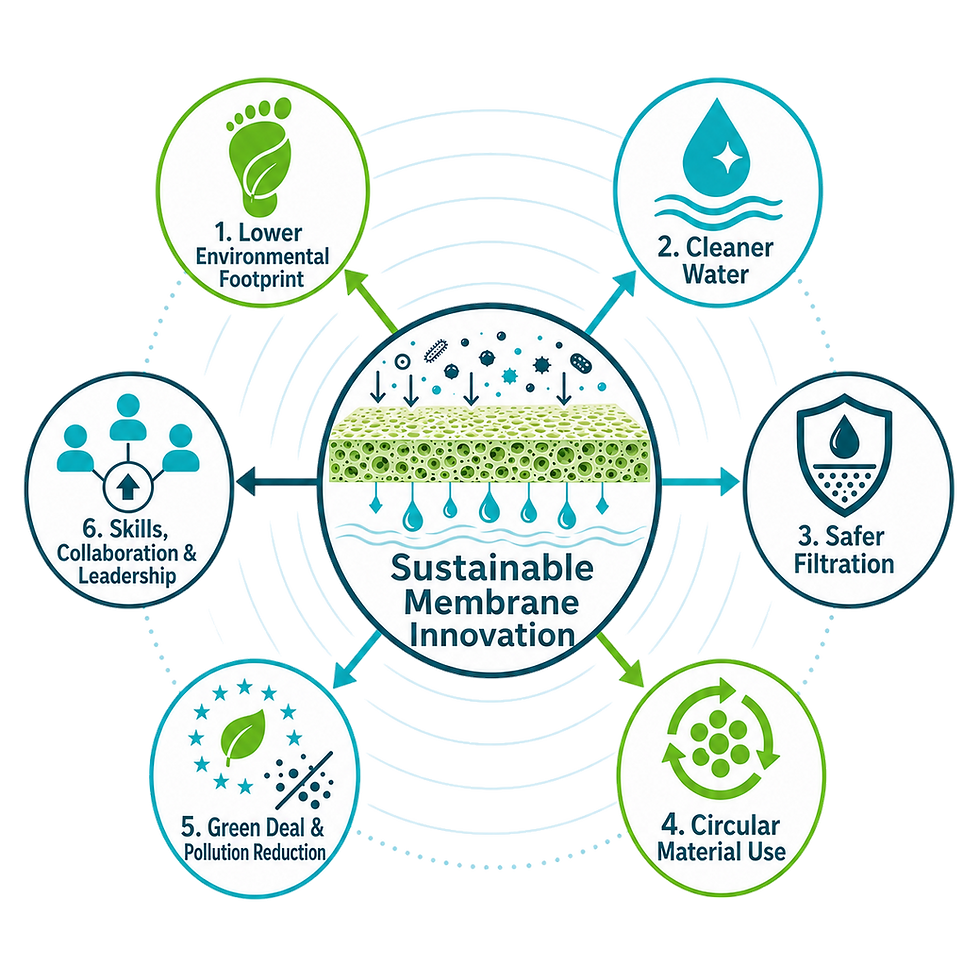
Green-Mem aims to reduce the environmental footprint of membrane technologies while supporting cleaner water, safer filtration and more circular material use. By replacing fossil-based polymers and hazardous solvents with renewable, bio-based and recyclable alternatives, the project contributes to wider European priorities around the Green Deal, circular economy, sustainable materials and pollution reduction.
Its longer-term value lies not only in the membranes themselves, but also in the knowledge, skills and collaborations created through the staff exchanges. Green-Mem will help position Europe and its international partners at the forefront of sustainable membrane innovation.
The Impact
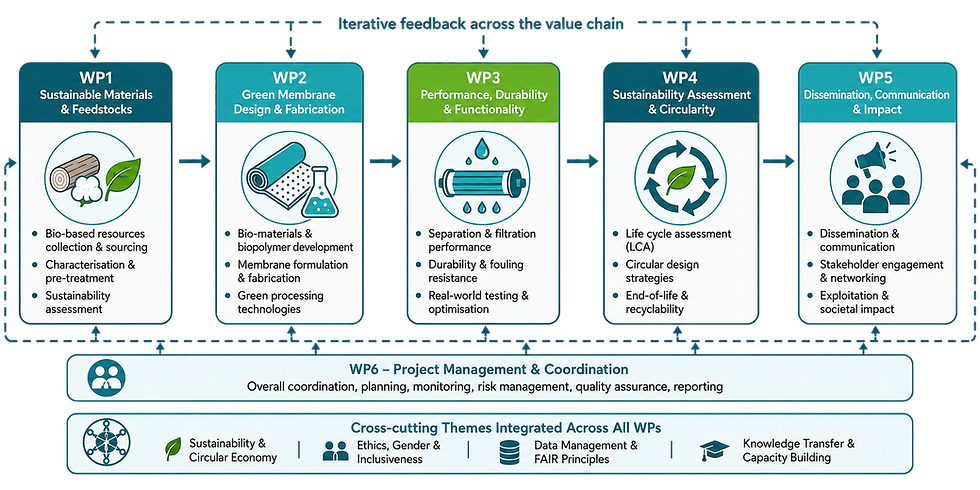
The workflow moves from sustainable materials selection and green membrane development through to optimisation, pilot testing, circularity assessment, exploitation and communication. Each work package builds on the previous one, while feedback loops ensure that technical progress, machine learning insights, stakeholder input, sustainability evidence and market needs inform the project as it develops. Cross-cutting themes such as ethics, data management, circular economy, inclusiveness and knowledge transfer are integrated across all activities.